
Community wealth is built from more than financial capital.
Trust, skills, knowledge, culture, institutions, physical assets and healthy ecosystems can all be mobilised to create new forms of wealth that stay in a place and strengthen it over time.
One of the central questions in Community Wealth Building is whether wealth created in a community stays there, circulates locally, and contributes to long-term wellbeing — or whether it leaks away.
Underneath that is another important question:
What counts as wealth in the first place?
In Regen Labs’ work, we see wealth in many forms. It lives in land and buildings, enterprises and money, but also in relationships, local leadership, knowledge, cultural strength, strong institutions and healthy landscapes. These forms of wealth are interconnected. And often, communities mobilise one form of capital to create another.
This was one of the strongest insights emerging from Regen Labs’ research for Fay Fuller Foundation, Catalysing Community Wealth. In that research, we reviewed more than 100 examples of Community Wealth Building and analysed 16 in depth to understand how communities build, retain and steward wealth over time.
Seeing community wealth more clearly
To make these different forms of wealth visible, we applied an 8 Capitals lens across the 16 case examples. It helped us see not only what communities already hold, but how one form of capital can be mobilised to create another.

What we learned
1. Communities can mobilise one form of wealth to create another
A community may begin with strong relationships, local legitimacy, a shared purpose, or practical know-how. These can help mobilise finance, attract partners, establish governance vehicles, acquire assets, or create new enterprises.
2. Financial capital is only part of the story
Money matters, but it is often not the first thing that makes action possible. Many initiatives begin with less visible forms of wealth: trust, leadership, organising, cultural strength, governance capability, technical support, and local knowledge.
3. Wealth can become cumulative
When communities build structures that allow them to retain ownership, capability and value, one initiative can become the foundation for the next. An asset can generate revenue. A governance vehicle can support future investment. A successful collaboration can increase confidence and readiness for what comes next.
With a holistic view of wealth, community wealth building can help communities build forms of wealth that support greater agency, resilience and long-term prosperity.
A practical example: Castlemaine Community Investment Co-operative
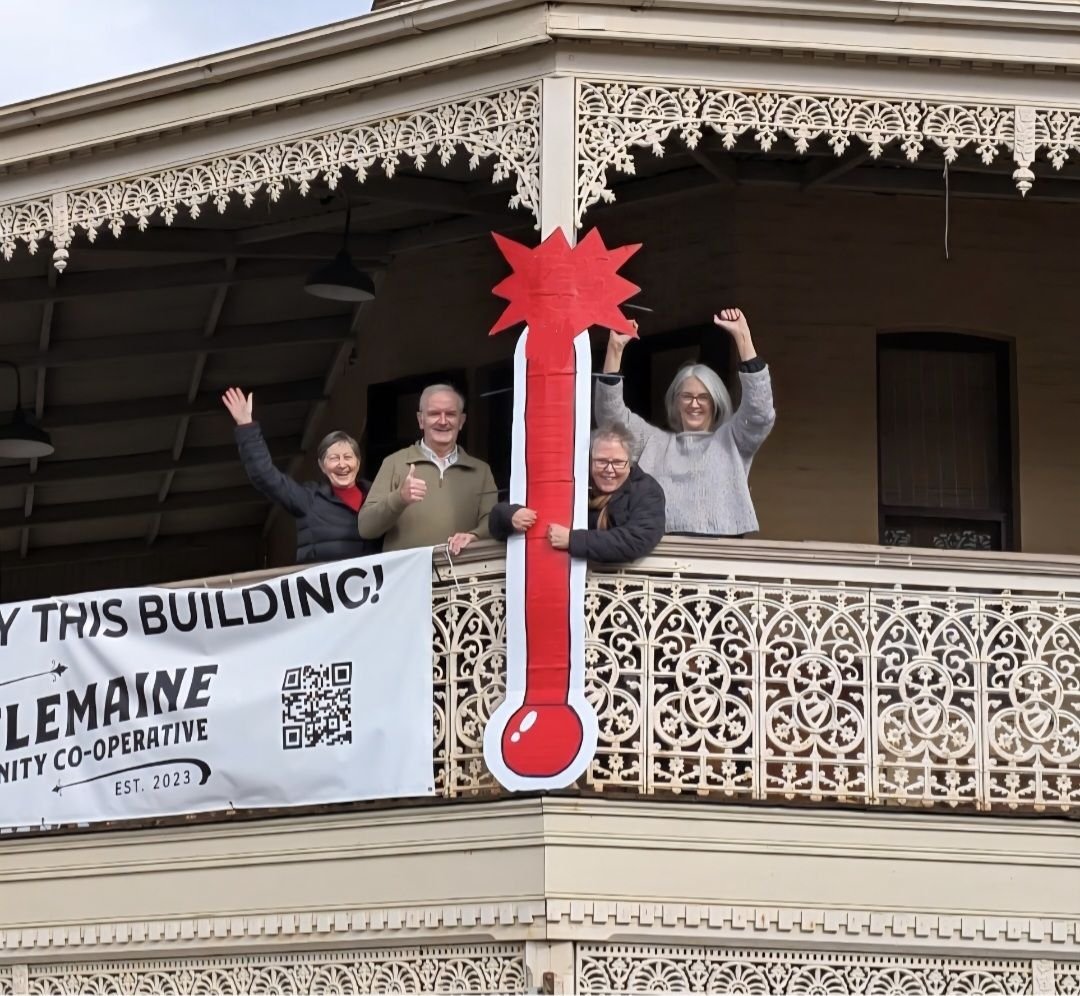
The Castlemaine Community Investment Co-operative offers a strong example of how different forms of capital can work together.
Read more: How we did it guide
Around 330 investors pooled $2 million through community debentures to purchase The Hub, securing shared infrastructure and rental income in community hands
In this case, the community already held important forms of wealth: social trust, a strong local identity, collective organising capability, a large community of members, and a willingness to act together. These forms of capital helped mobilise around $2 million in financial capital through community debentures.
That financial capital then enabled the purchase of The Hub — a significant local building — moving material capital into community ownership.
At the same time, the process strengthened other forms of wealth: local governance capability, community confidence, investment literacy, and the institutional infrastructure needed to support future community investment.
The important point is this:
The financial capital did not appear from nowhere - it was unlocked through other forms of wealth the community had already built over time.
How wealth was mobilised and generated in Castlemaine

What “making it visible” means for communities and partners
One of the practical benefits of an 8 Capitals lens is that it helps communities and their partners see what is already present in a place — and what might be strengthened.
Every community already holds forms of wealth. There may be land and buildings, local enterprises, cultural knowledge, strong relationships, skilled people, civic institutions, financial resources or healthy natural systems. The opportunity is to understand what is already there, how value is currently flowing, and where there is potential to build more community control, ownership and benefit.
Useful questions you may wish to explore:
What forms of wealth already exist in this community?
Who currently owns, controls or has access to them?
Where is value being lost or flowing out of the place?
What strengths could be mobilised differently?
What could be built, owned or stewarded together that would strengthen the community over time?
This way of thinking also matters for philanthropy, government, enterprises and other partners. It invites a broader view of what communities need in order to build wealth. That may include funding, but it may also include governance support, capability development, convening, long-term partnership, access to technical expertise, or the creation of enabling financial and institutional infrastructure.
Go deeper
This insight comes from Catalysing Community Wealth: How Regional Communities Build and Retain Local Prosperity, Regen Labs’ research for Fay Fuller Foundation.
The report explores 16 Australian and international examples, three interconnected Community Wealth Building pathways, the conditions that enable them, and the roles communities, philanthropy, government, enterprise and other partners can play.
Exploring community wealth in your place?
Regen Labs works with communities and partners to understand the assets, relationships and forms of wealth already present in a place, and identify opportunities to strengthen and mobilise them. Get in touch if you’d like to explore what this could look like in your community.